Custom Search
Showing posts with label South Africa Stadium Guide. Show all posts

Friday, June 11, 2010

World Cup South Africa Stadium Guide - Loftus Versfeld Stadium

With the World Cup in South Africa fast approaching, we take a look at the Pretoria venue, Loftus Stadium.

City: Pretoria/Tshwane
Surface: Grass
Capacity: 50,000


Loftus Versfeld is in the heart of South Africa's capital, Pretoria, and has a seating capacity of just over 50,000. Very little upgrade was done to the stadium to meet FIFA standards and it is now ready for the 2010 FIFA World Cup. The stadium is one of the oldest in South Africa and has often been used for both rugby and football matches.

World Cup South Africa Stadium Guide - Royal Bafokeng Stadium

Rustenburg is one of the host cities for the 2010 World Cup in South Africa, and the Royal Bafokeng Sports Palace will host six matches during the showpiece event.
City: Rustenburg
Surface: Grass
Capacity: 42,000


The Royal Bafokeng Sports Palace is a rugby union, football and athletics stadium in Phokeng near Rustenburg, South Africa. It was originally built as a venue for the 1995 Rugby Union World Cup and was named after the Royal Bafokeng Nation, the tribe that is prominent in the area. Although originally built as a rugby stadium, the venue has been used for football more often than any other sport after the 1995 World Cup.

Thursday, June 10, 2010

World Cup South Africa Stadium Guide - Mbombela Stadium

With a strong African theme in the unique design of the arena, Nelspruit’s Mbombela Stadium will be yet another of South Africa’s unique stadiums at the 2010 World Cup.
City: Nelspruit
Surface: Grass
Capacity: 43,500


Mbombela Stadium is the pride of Nelspruit, the capital city of the Mpumalanga province in South Africa. The name means ‘many people together in a small space’ in the siSwati language, and the venue will certainly attract many people to Nelspruit during the World Cup in June, when four matches will take place.

World Cup South Africa Stadium Guide - Peter Mokaba Stadium

As the smallest of the host cities in South Africa, Polokwane has produced the Peter Mokaba Stadium, the venue that will host four first round World Cup matches.
City: Polokwane
Surface: Grass
Capacity: 46 000


Situated in Polokwane, previously known as Pietersburg, the capital of the football-mad province Limpopo, the Peter Mokaba Stadium is another newly built venue for the FIFA World Cup, replacing the old Peter Mokaba Stadium, situated next to it, after initial upgrade plans were abandoned in favour of a new construction.

World Cup South Africa Stadium Guide - Free State Stadium Bloemfontein

Bloemfontein is one of the host cities for this year’s World Cup, and the Free State Stadium will see some fine football action during the event.
City: Bloemfontein/Mangaung
Surface: Grass
Capacity: 46,000


Bloemfontein is situated in the municipality of Mangaung, which means 'Place of the Cheetahs' in the seSotho language and this is where you will find the Free State Stadium, home to the country's most fanatical group of supporters.

World Cup South Africa Stadium Guide - Nelson Mandela Bay Stadium

Port Elizabeth has produced a fine stadium, which has been named after one of South Africa’s most famous sons, Nelson Mandela.


City:
Port Elizabeth
Surface: Grass
Capacity: 48,000


The Nelson Mandela Bay Stadium is situated in Port Elizabeth on South Africa's south-east coastline. It is set to host five first round matches, one second round game, one quarter-final, and the third place play-off. The stadium has a capacity of 48,000, and its design is a beautiful one, with a very modern exterior and a clean and sharp interior.

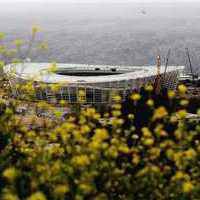
World Cup South Africa Stadium Guide - Cape Town Stadium - Cape Town

With a number of impressive stadia having been built in South Africa, we look at the stadium, which is set to host a World Cup semi-final in Cape Town.
City: Cape Town
Surface: Grass
Capacity: 68 000


One of the most beautiful cities in South Africa provides an equally magnificent stadium ahead of the World Cup to be held in the country next year, and the Cape Town Stadium will be one of the major venues for the 2010 spectacular, hosting a number of matches including a semi-final showdown.

The stadium has been built on the edge of the city centre and behind the famous V&A Waterfront, allowing easy access from the inner city, while placed only a few hundred metres away from the coastline.

World Cup South Africa Stadium Guide - Moses Mabhida Stadium Durban

takes a look at one of the world’s most magnificent stadiums, built in the coastal city of Durban ahead of the 2010 World Cup.

By Peter Pedroncelli

Mar 9, 2010 11:13:00 AM
Moses Mabhida Stadium aerial - Durban
Photo Gallery
Zoom
Moses Mabhida Stadium aerial - Durban

Related Links

City: Durban
Surface: Grass
Capacity: 70,000


Durban’s new Moses Mabhida Stadium has been designed as a state-of-the-art, world-class stadium for the 2010 World Cup, and as a multi-functional and easy-to-maintain asset for the city of Durban to enjoy in the future. The creation of this precinct means that Durban will be one of the few African cities able to host most of the Olympic disciplines within a single sporting precinct.

The stadium infield has been designed and built in accordance with the latest international sporting codes. It will have the capacity to hold 70,000 spectators during the World Cup and will then be reduced to 54,000 in legacy mode, once the tournament has ended. This gives the stadium a huge capacity, and it has therefore won the right to host one of the semi-finals during the competition.


Moses Mabhida Stadium At Night

The stadium is unique in a very special way, with an arch, known as the ‘Arch of Triumph’, going over the stadium in an engineering feat which has been acclaimed worldwide. The grand centre arch, 106m high, will become a world first tourist attraction, thanks to a high-tech cable car designed to take visitors up to its highest point, where they can disembark and take in breathtaking, panoramic views of the city. This 350m long free-span steel arch weighs 2,600 tonnes.

The Moses Mabhida Stadium seeks to be more than just a football stadium, and more still than just a sporting facility. The venue strives to become a cultural, sporting and general events hub, while providing the city with yet another tourist attraction in its own right, with the stunning design and arch which floats high above the city providing visitors with plenty to see.


Moses Mabhida Stadium Aerial View

Facts

- The entire stadium has been designed and built in line with all the latest safety and security requirements.
- 150 suites, housing a total of 7,500 seats, will cover a range of different hospitality options.
- The stadium is owned by eThekwini Municipality and will be used to cater for a variety of sporting activities such as rugby, cricket and athletics, apart from football.
- The arena will host what may be the most anticipated game of the group stages at the World Cup, with Portugal taking on Confederations Cup champions Brazil.
- The stadium was officially completed in November 2009.
- The roof, consisting of Teflon coated glass fibre membranes.
- 46,000 square metres in total.
- is attached to the arch by 95mm diameter steel cables.

History

Named after a hero of the working class people; the Kwazulu Natal’s Moses Mabhida Stadium located adjacent the ABSA Stadium in the Kings Park Sporting Precinct - a site located in Stamford Hill, is yet another world class multi-purpose stadium set to make history at the 2010 World Cup, for which the venue was newly built.

To make way for the arena, Kings Park Stadium was demolished in late 2006 to develop a new stadium complex set to comprise of an adjoining indoor arena, sporting museum, sports institute and a new transmodal transportation station for the world showpiece.


View From The Arch

Getting There

Conveniently situated close to the city centre, and as part of the Kings Park Sporting Precinct, the Moses Mabhida Stadium will also be the ideal venue for hosting recreational and cultural events.

On match days, Walter Gilbert Road will be closed to traffic, creating a safe pedestrian precinct. Durban’s People Mover bus will stop at the stadium, allowing spectators to park at one of the many parking facilities in town and get to the stadium safely and quickly. A new Kings Park Railway Station has been developed adjacent to the stadium, allowing visitors direct access to the stadium precinct.

Durban also has a completely new International Airport, La Mercy, which has made direct travel from overseas countries possible, while routes to all the other host cities are also available. Durban is also easily accessible via road highways from the other cities, and being a coastal area, ships and cruise liners dock at the Durban harbour, so travel by sea is a possibility as well, with the stadium visible from far off the coast of the South African city.


These Seats Will Be Filled In 2010

Plus And Minuses

Pluses


- Each seat is spacious and has excellent site lines and ease of access is ensured, with 50% of the stadium's seats accessible from the main entrance level.

- The huge capacity of 70,000 seats means that this venue is one of the biggest at the World Cup, with only Soccer City in Johannesburg able to boast a bigger capacity.

- The stadium will allow for the safe and unimpeded movement of pedestrians and vehicles on major match days.

- With its facilities, it is not only a tourist attraction in its own right, but also the centrepiece of the King's Park Sporting Precinct, which will support a wide range of sporting, commercial, cultural, retail and leisure activities seven days a week, 365 days a year.

- The design of the actual stadium is possibly the most beautiful of the newly built stadiums, with Soccer City, Cape Town Stadium and Nelson Mandela Bay Stadium all vying for the crown.

- The weather in Durban during the World Cup will provide some of the warmest and most pleasant winter weather imaginable.

Minuses

- The stadium seats a whopping 70,000 people, and the games will be sold out, so it will take some time for spectators to leave the venue once the game is over.


The Venue Will Host Seven Matches

Games To Be Played


The Moses Mabhida Stadium will have the pleasure of hosting five group matches, one second round match, and a semi-final match at the 2010 World Cup. The group stages will see some of the world’s top teams in action, with Germany playing Australia, Spain taking on Switzerland, Netherlands facing Japan and Nigeria clashing with South Korea, before the ultimate group stage encounter between the mighty football giants of Portugal and Brazil.

World Cup South Africa Stadium Guide - Ellis Park Johannesburg

takes a closer look at one of the main stadiums for the 2010 World Cup in South Africa, Johannesburg’s second venue – Coca-Cola Park

By Peter Pedroncelli

Mar 5, 2010 1:40:00 PM 

World Cup 2010: Ellis Park Stadium (PA)
Photo Gallery
Zoom
World Cup 2010: Ellis Park Stadium (PA)

Related Links

City: Johannesburg
Surface: Grass
Capacity: 62,000


Ellis Park Stadium, or Coca-Cola Park, as it was recently renamed after sponsorship agreements, has been the stage for many unforgettable football matches in the South African domestic scene, as well as a few Bafana classics. Coca-Cola Park hosted the final, as well as the opening and closing ceremony of the Confederations Cup, amongst other matches at the venue.

The ground has undergone major changes ahead of the World Cup in preparation for the showpiece event. The west, south and north stands have been revamped with additional seating and a new roof added. New change rooms, VIP, media and medical facilities have all been added. In addition, a new entrance façade to the north stand has been built.


Coca-Cola Park Stadium Aerial View

A new, five-level car park has also been completed, which accommodates 1,200 cars. The revamped Coca-Cola Park Stadium seats 62,000 fans, increasing its capacity by almost nine percent from the previous 57,000.

With state-of-the-art media facilities, team whirlpools, top-class VIP areas for dignitaries, accessibility for disabled fans, a new pitch and a top-notch audio-visual setup to keep the fans informed during the game, Coca-Cola Park Stadium in Johannesburg is ready to welcome fans and players at the World Cup.


A View From The VIP Area

Facts

- More than 30 000 square metres of concrete was poured into the structure.
- More than 4 500 tons of reinforcement was used in the floor area of 48 000 square metres, and this does not include the seating areas.
- Nearly 500 000 pockets of cement went into the work done over 3,2 million man hours.
- There are about 3,1 million bricks laid at the stadium, 1372 windows of various sizes, more than 4,1 km of handrails and a total of 70 km piping for chairs.
- There are fifty 200 watt speakers, thirty 30 watt speakers & 245 speakers clustered around the stadium.
- Ellis Park is home to one of the country's most popular club, Orlando Pirates FC.
- The stadium saw South Africa crowned as Rugby World Cup champions in 1995.
- In 1987 Ellis Park Stadium was listed on the stock exchange.

History

The stadium was first built in 1928 as a rugby union stadium. It was demolished and rebuilt in 1982, but it was again used exclusively for rugby. It was named after JD Ellis, a Johannesburg city councilor who approved the use of the land for a stadium, setting aside 13 acres. The stadium was used for the finals of the 1995 IRB Rugby World Cup.


Coca-Cola Park Will See Seven World Cup Matches

Getting There

Parking is problematic due to inner-city congestion. The best option is the free park-and-ride facility, with pick-up points conveniently located around the city and buses constantly running during the event. The Bus Rapid system is another public transport option to use during the tournament, with a route that drops off passengers a few hundred metres away from the stadium, while traveling around the city to pick up and drop off passengers for a fee.

The Doornfontein and Ellis Park railway stations are in the process of being upgraded, adding another element of easy access transport to the stadium, but the safest and most comfortable remains the bus systems. A taxi cab service to one of the drop off points for the park and ride may be the best option to get to the stadium, while picking up a taxi cab from the park and ride facility after the game is also a good idea.

Plus and Minuses

Pluses


- The atmosphere at Coca-Cola Park is often electric, as the venue is used to hosting Johannesburg supporters who turn out for football and rugby in large numbers.

- The Coca-Cola Park sports complex is a huge area containing facilities for various sports codes, and the management of the venue are used to managing big events and large crowd capacities.

- The view from the stands at the stadium is fantastic, with fans able to get very close to the pitch and see their idols from close up, while even the seats at the top of the stadium seem to be towering right above the pitch due to the design.

- Security and infrastructure around the venue has been beefed up, with CCTV cameras and better lighting helping security to keep the area safe, while new transport infrastructure has been built.

- The stadium is not as modern as some of the recently built stadia around the country, but there is a great deal of tradition and history in the venue’s past.


Fans Will Be Pouring Through These Gates In June

Minuses

- The congestion of the inner city makes traffic a realistic problem around the stadium.

- The open nature of the stadium design means that some of the higher seats in the stadium can be particularly cold in winter, so dress warmly.

- The venue is the home of the Lions rugby side, and the sport has a negative effect on the pitch, as a great deal of damage is done to the grass and the ground needs to be watered more often to promote growth and stop the ground from hardening.

Games to be Played


Coca-Cola Park Stadium In Johannesburg

Coca-Cola Park will have the fortune of hosting seven World Cup matches at the 2010 tournament; with five group stage matches being complimented by a Round of 16 encounter and a Quarter-Final match. The five group stage games will see Argentina take on Nigeria, Brazil clash with Korea DPR and Slovenia come up against USA, while Spain will match up against Honduras and defending champions Italy play against Slovakia.
source: goal.com

World Cup South Africa Stadium Guide


Goal.com World Cup 2010 VIDEO Stadium Guide – Soccer City Stadium

Soccer City
Johannesburg

With the opening and final game of this year’s World Cup set to take place in Johannesburg, Soccer City Stadium will be one of the focal points of this showpiece event.
Goal.com World Cup 2010 Stadium Guide – Coca-Cola Park Stadium

Ellis Park
Johannesburg

Goal.com takes a closer look at one of the main stadiums for the 2010 World Cup in South Africa, Johannesburg’s second venue – Coca-Cola Park.
Goal.com World Cup 2010 Stadium Guide - Moses Mabhida Stadium

Moses Mabhida Stadium
Durban

Goal.com takes a look at one of the world’s most magnificent stadiums, built in the coastal city of Durban ahead of the 2010 World Cup.
Goal.com World Cup 2010 Stadium Guide - Cape Town Stadium

Cape Town Stadium
Cape Town

With a number of impressive stadia having been built in South Africa, we look at the stadium, which is set to host a World Cup semi-final in Cape Town.
Goal.com World Cup 2010 Stadium Guide - Loftus Versfeld Stadium

Loftus Versfeld Stadium
Pretoria

With the World Cup in South Africa fast approaching, we take a look at the Pretoria venue, Loftus Stadium.
Goal.com World Cup 2010 Stadium Guide - Nelson Mandela Bay Stadium

Nelson Mandela Bay
Port Elizabeth

For the 2010 World Cup in South Africa, Port Elizabeth has produced a fine stadium, which has been named after one of South Africa’s most famous sons, Nelson Mandela.
Goal.com World Cup 2010 Stadium Guide - Free State Stadium

Free State Stadium
Bloemfontein

Bloemfontein is one of the host cities for this year’s World Cup, and the Free State Stadium will see some fine football action during the event.
Goal.com World Cup 2010 Stadium Guide – Peter Mokaba Stadium

Peter Mokaba Stadium
Polokwane

As the smallest of the host cities in South Africa, Polokwane has produced the Peter Mokaba Stadium, the venue that will host four first round World Cup matches.
Goal.com World Cup 2010 Stadium Guide - Mbombela Stadium

Mbombela Stadium
Nelspruit

With a strong African theme in the unique design of the arena, Nelspruit’s Mbombela Stadium will be yet another of South Africa’s unique stadiums at the 2010 World Cup.
Goal.com World Cup 2010 Stadium Guide - Royal Bafokeng Stadium

Royal Bafokeng Stadium
Rustenburg

Rustenburg is one of the host cities for the 2010 World Cup in South Africa, and the Royal Bafokeng Sports Palace will host six matches during the showpiece event.

World Cup South Africa Stadium Guide - Soccer City Johannesburg

With the opening and final game of this year’s World Cup set to take place in Johannesburg, Soccer City Stadium will be one of the focal points of this showpiece event.

By Peter Pedroncelli


Soccer City 2010 Stadium- Soweto, 
Johannesburg
Photo Gallery
Zoom
Soccer City 2010 Stadium- Soweto, Johannesburg

Related Links

City: Johannesburg
Surface: Grass
Capacity: 89 000


Soccer City is 10 kilometres from the Johannesburg city centre, on the outskirts of Soweto, and it will be the major venue at the 2010 World Cup, hosting eight games altogether, including the opening ceremony and match, and the closing ceremony and final. This means that a piece of history will be made as the World Cup is won on July 11 in Africa for the first time, in Soccer City Stadium.

The most striking feature of the stadium is its calabash-shaped design, selected from a number of competing designs. The calabash was picked because it is a uniquely African object and is a recognisable symbol of the African continent. The calabash, or "melting pot of African cultures", sits on a raised podium, on top of which is located a "pit of fire", according to the designers.


The pot’s façade is made up of laminated fibre reinforced concrete panels, in a selection of 8 colours and 2 textures that make reference to the shades and textures of the calabash. The pot is punctured by open or glazed panels which create a suggestion of pattern on the façade that comes into its own when the inside volumes are illuminated.

Upon the façade 10 vertical slots can be seen, which are aligned geographically with the 9 other 2010 stadia, as well as the Berlin stadium. These are representative of the road to the final, and it is hoped that, after the World Cup, the scores of each game at each venue will be placed in pre-cast concrete panels on the podium. A visit to the stadium will thus provide one with a full history of the World Cup and all its scores.


Looking at the stadium from the outside is quite an experience, as the towering monster of a venue takes up a massive area and is very imposing indeed, but going into the stadium truly allows one to understand the magnitude of the place.  Soccer City is a majestic stadium, and it will be a true gem come July 2010, when the world will be watching South Africa and the World Cup champions will be crowned on a podium in the venue. Africa can be proud of a fine stadium, which will no doubt contribute in a big way to a fine World Cup.

Bet Now !

Free Website Hosting